

Nurse Bag Essentials: 2026 Must-Haves for Every Shift

In this article
You don’t realize how important your bag setup is—until something goes wrong mid-shift.
Your favorite pen runs out of ink during the report. Your phone battery drops to 2 percent. Your hands are cracked from constant sanitizer and sterile gloves.
These may not be major problems on their own. But together, they slow you down and add unnecessary hurdles to a fast-paced 12-hour shift. A well-prepared setup doesn’t just make your day easier; it keeps you efficient, focused, and ready for anything.
This 2026 guide breaks down the nurse bag essentials that actually matter, what to pack for different clinical roles, and exactly what to pack for a nursing shift to keep you prepared in the real world.
Best Nurse Bag Essentials by Situation
If you want a fast answer, here is how to prioritize your packing based on your specific shift needs:
- Best for long 12-hour shifts: High-capacity power bank, insulated water bottle, heavy-duty moisturizing cream, an extra pair of scrubs, and snacks.
- Best for minimal carry: Stethoscope, trauma shears, four reliable pens, and a pocket reference guide.
- Best for heavy clinical use: Backup stethoscope, blunt-tip scissors, multiple rolls of medical tape, and customized patient report sheets.
- Best for travel nurses: Universal power adapters, resuseable water bottle, and physical copies of state-specific licenses.
Quick 2026 Packing Checklist
If you’re packing your bag right now, here is a quick nurse work bag checklist featuring the absolute necessities most nurses rely on every shift.
| Category | Must-Have Items |
| Clinical Tools | Stethoscope, blunt-tip scissors, medical tape, watch with a second hand |
| Hygiene & Care | Hand sanitizer, moisturizing lotion, lip balm, feminine products, nail trimmers |
| Tech & Power | Smartphone, portable charging bank, noise-canceling headphones |
| Fuel & Hydration | Insulated water bottle, protein bars, packed lunch, gum or mints |
| Organization | Patient report sheets, pocket reference guide, clear zipper pouches |
The items you leave behind are usually the ones you end up needing at the worst possible moment.
Related Article: 15 Best Nursing Bags for Every Shift
The Biggest Packing Mistake Nurses Make
Most new nurses overpack. They stuff their bag with everything they might need, and then spend half their shift digging for what they actually use.
Experienced nurses pack light but smart. They focus on the 10 to 15 items that solve real problems: a backup stethoscope, a portable charger, quick-energy snacks, and a system for organization.
The difference between a disorganized shift and a smooth one often comes down to what is in your bag—and how quickly you can access it.
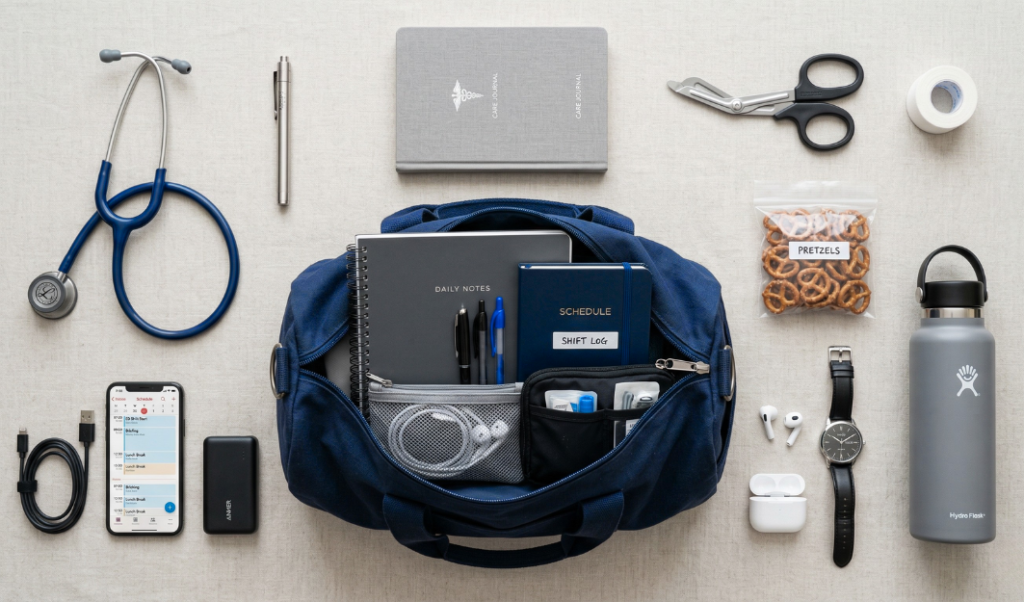
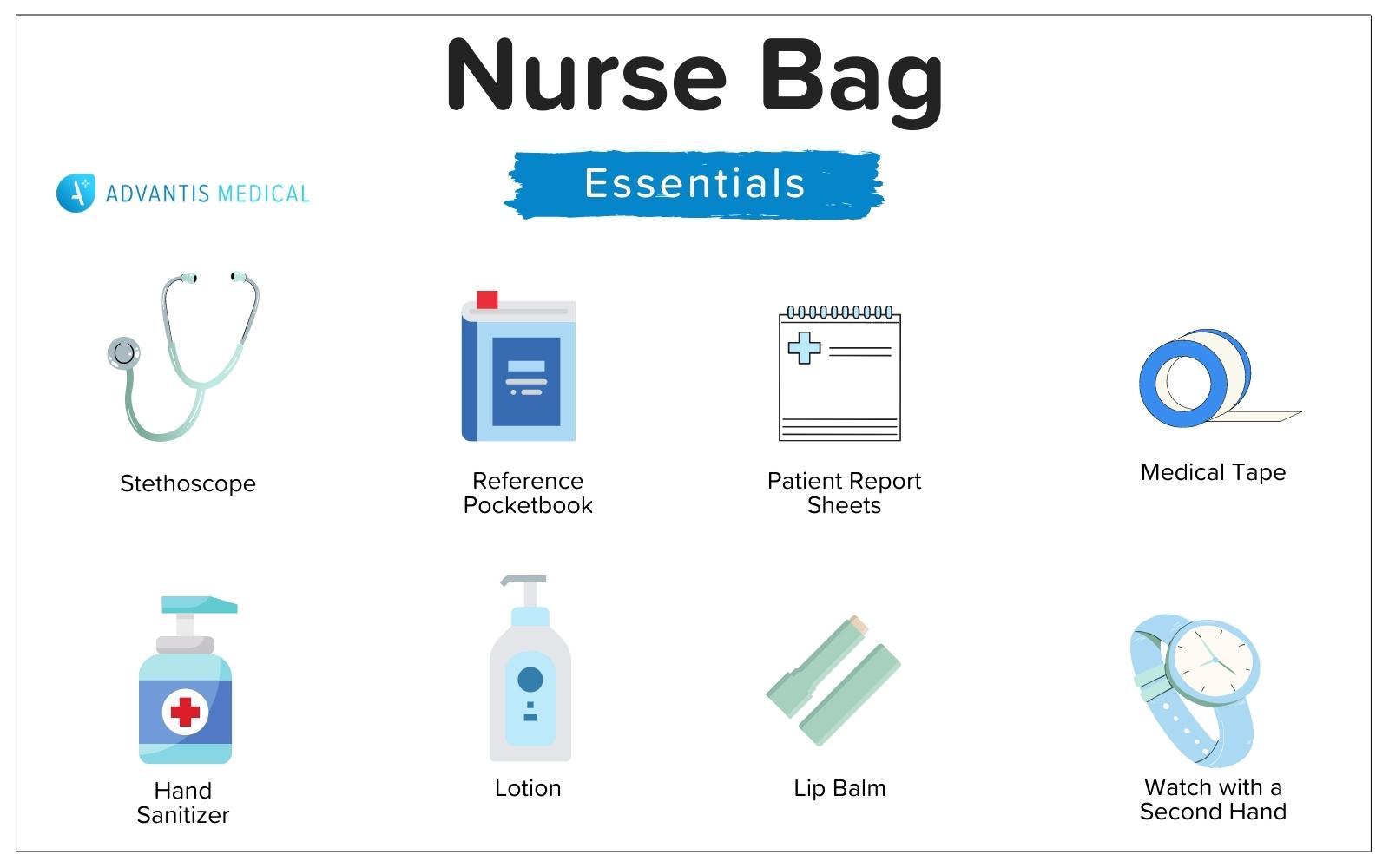
To visualize exactly what nurses carry in their bags, visual organization is key.
The True Cost of Being Unprepared
Forgetting one small item doesn’t seem like a big deal—until it is.
Not having a pen during a report slows down your documentation. A dead phone battery completely cuts off your communication with your family or your music during your break. Dry, cracked hands make glove changes incredibly uncomfortable.
These small gaps create daily friction. A well-stocked setup acts as your personal insurance policy against unpredictable moments on the floor.
What Nurses Forget to Pack (Until They Need It)
Even experienced nurses forget these items until they are stuck without them.
- Extra pens: Nurses have a highly protective relationship with their pens. Pack multiples because they will inevitably disappear.
- Portable charger: A dead phone at hour 11 is a major roadblock. Keep a dedicated power bank in your bag at all times.
- Backup stethoscope: When your main one suddenly sprouts legs and walks off the unit, you will wish you had a spare.
- Small notepad: Perfect for quick notes, door codes, or extensions when your phone is not handy.
- Cash or card: Essential for vending machine emergencies when the hospital cafeteria is closed.
- Highest-paying states and cities, ranked from live contracts
- Take-home pay and tax considerations
The Core Clinical Kit
These are the non-negotiable tools you need to function effectively on the floor.
- Stethoscope: This is non-negotiable. The truly prepared clinicians also keep a backup stethoscope or a pediatric attachment tucked away. For best practices in cleaning, refer to the American Nurses Association recommendations.
- Trauma Shears and Scissors: Blunt-tip scissors are critical for emergency situations. You’ll use this more than you expect, especially on days when everything runs behind. They are perfect for quickly accessing dressings or safely cutting materials away from a patient.
- Medical Tape: Having a roll of medical tape handy is required for labeling lines, securing IVs, and creating improvised solutions on the fly.
- Reference Pocketbooks: A reference pocketbook for your specific specialty is invaluable. This often matters most when you encounter a unique case or need to double-check a specific dosage.
- Patient Report Sheets: These keep your patient’s vital information at your fingertips. Print out your favorite templates at home and keep a clean stack in a dedicated folder.
- Watch with a Second Hand: Obtaining manual vitals without a proper watch is almost impossible. Save yourself the hassle and keep a reliable watch in your kit.
Comfort and Survival Gear
Caring for others takes energy. Caring for yourselves requires a few strategic items to keep you comfortable, focused, and hygienic.
Hygiene and Personal Care
- Hand Sanitizer: Keeping a personal bottle of sanitizer with moisturizers is a core part of proper infection control, as emphasized by the Centers for Disease Control and Prevention.
- Moisturizing Cream: Constant handwashing and sanitizing dry out your skin. Keep a high-quality moisturizing cream available to relieve the pain.
- Lip Balm: Wearing masks and personal protective equipment all day easily causes dry, cracked lips. Don’t leave home without it.
- Feminine Hygiene Products: Twelve hours is far too long to be caught off guard. Always keep a backup stache.
- Nail Trimmers and Hair Ties: Broken, jagged nails snag on patients and increase infection risk. Keep nail clippers and a few backup hair ties tucked in a side pocket.
Shift Survival
- Over-the-Counter Meds: Keep a small travel bottle of ibuprofen or acetaminophen. This becomes important when a sudden headache or stomachache hits, so you don’t have to wait until you get home.
- Gum: Gum freshens your breath after lunch and helps with midnight drowsiness.
- Compact Umbrella: Keeping a compact umbrella saves you during unpredictable commutes.
- Empty Plastic Bags: A simple plastic bag is a brilliant way to isolate contaminated clothing or contain messy items until you get home.
Technology
- Smartphone and Tablet: Your phone keeps you connected to colleagues and medical apps. A tablet is a great optional addition for taking notes and managing patient information.
- Portable Charger: It’s crucial to keep your devices charged. Most nurses don’t think about this until their phone dies halfway through a shift and there’s nowhere to plug in. The Occupational Safety and Health Administration workplace safety guidelines support keeping communication devices powered and ready.
- Headphones: A good pair of noise-canceling headphones is highly recommended for enjoying music or podcasts during your break.
Fuel and Hydration
- Hydration and Snacks: Packing a nutritious lunch, a large water bottle, and quick-energy snacks like almonds or protein bars is required. Avoid sugary energy drinks that lead to a crash.
What to Pack Based on Your Role
Not all nurses need the same gear. Before you pack, consider what your specific unit requires.
- Floor Nurses (ER, ICU, Med-Surg): You likely leave your bag in the breakroom. Focus on packing quick-grab clinical tools, high-protein snacks, and a portable charger.
- New Grad Nurses: Walking onto the floor for your first shift is intimidating. As a new grad, the absolute best essentials focus strictly on organization. Stick to the basics: a stethoscope, a pocket reference guide, report sheets, and a small pocket planner.
- Travel Nurses: Due to their unique lifestyle, travel nurses need highly versatile gear. Focus on lightweight construction, universal power adapters, multi-climate layering pieces, and digital backups of your credentials.
What NOT to Pack in Your Bag
| Do Not Pack | Why It’s a Problem |
| Unsealed Medications | Carrying loose pills is a liability risk; they could be mistaken for a hospital supply |
| Perfumed Products | Heavy lotions and sprays violate the strict scent-free policies of modern facilities |
| Worn-Out Shoes | Keeping dirty shoes stuffed in your clean bag is a major infection control hazard |
| Unlabeled Liquids | Causes TSA issues for travel nurses and workplace confusion on the floor |
| Non-Hospital Electronics | May not meet basic clinical infection control or privacy standards |


How to Organize Your Gear and Keep it Clean
Your bag moves through high-risk clinical environments daily, so cleaning isn’t optional; it’s part of infection control. A well-organized nursing bag setup makes your workflow instantly smoother.
- Use Multiple Compartments: A bag with several internal compartments helps you keep everything in its exact place.
- Categorize with Pouches: Use small, clear zippered pouches to separate your medical tools from your personal items.
- Daily Wipe-Downs: After each shift, use hospital-grade disinfectant wipes to clean the handles, straps, and zippers.
- Monthly Deep Cleaning: Empty your bag completely once a month and perform a deep clean following the manufacturer’s instructions. Some bags are machine-washable; others require hand cleaning.
Beyond Your Bag
Your bag is only one part of your shift. Pairing a dialed-in setup with comfortable nursing shoes and your favorite scrubs makes your day much more manageable.
Above all else, don’t forget that caring for yourselves mentally and physically is just as crucial to staying energized and extending your career.
A Travel Nurse Agency That Truly Cares
Just like your bag setup removes friction from your shift, the right agency removes friction from your career. You pack your nursing bag with essentials, so you’re ready for anything. Shouldn’t your travel nurse agency do the same?
At Advantis Medical, we provide clear pay packages, recruiters who actually answer nights and weekends, and credentialing support that never delays your start date. We are building trusted, long-term partnerships that make your journey smooth, rewarding, and fully supported.
With over 700 5-star reviews, we have earned our reputation as the #1 travel nurse agency for nurses who want a true partner, not just a job board.
Start your next adventure today and explore high-paying travel nurse jobs to discover what is possible!
FAQs – Nurse Bag Essentials
What are the absolute must-have nurse bag essentials for 2026?
The five non-negotiable items every bag needs in 2026 include a high-quality stethoscope, a personal bottle of moisturizing hand sanitizer, blunt-tip trauma shears, a portable phone power bank, and quick-energy snacks like protein bars or mixed nuts.
How do I organize my bag for 12-hour shifts?
Follow a highly structured system to avoid losing gear. Use clear, zippered pouches for your medical tools, dedicate a thermal pocket specifically for your snacks, and use an exterior pocket for items you need instantly, like hand sanitizer or lip balm.
Do travel nurses need different bag essentials?
Yes. Because they constantly switch facilities, travel nurses should pack universal power adapters, multi-climate layering pieces, digital backups of credentials, and physical copies of their state-specific licenses.
What should I pack in my bag as a new nurse?
New nurses should pack the basics like a stethoscope, customized patient report sheets, a clinical reference pocketbook, lip balm, trauma shears, and extra pens. You should also carry a small notebook to write down important unit phone numbers.
How do I choose the best bag for hospital work?
Choose an option with multiple zippered sections, a padded sleeve for a laptop or tablet, and an exterior made of smooth, water-resistant material. Hospitals require strict infection control, so an easy-to-sanitize interior is an absolute necessity.
What should never be in your nursing work bag?
You should always leave behind unsealed medications due to liability risks, non-hospital-grade electronics, perfumed products that violate scent-free policies, non-labeled liquids, and worn-out shoes that pose an infection control hazard.
How often should I clean my clinical bag?
You should wipe down the high-touch areas of your bag, like the handles and zippers, with disinfectant wipes after every single shift. Once a month, you should completely empty the bag and perform a deep clean following the manufacturer’s instructions.


