

Travel Nurse Housing in Georgia: Best Rentals, Furnished Options & 2025 Tips


In this article
- What Every Travel Nurse Should Know About Housing in Georgia
- How Housing Choices Impact Your Real Take-Home Pay in Georgia
- 5 Essential Types of Short-Term Housing for Travel Nurses in Georgia
- Travel Nurse Housing in Atlanta: Costs, Tips & Top Areas
- Regional Housing Cost Breakdown for Travel Nurses in Georgia
- Transportation and Commute for Travel Nurses in Georgia
- Agency-Placed Housing vs. Housing Stipend: Maximizing Your Income & Flexibility
- Where to Find Short-Term & Furnished Rentals for Travel Nurses in Georgia
- Safety Tips for Travel Nurse Housing in Georgia
- A Travel Nurse Agency That Truly Cares
- FAQs: Travel Nurse Housing in Georgia
Finding the right travel nurse housing in Georgia can be one of the biggest challenges of starting a new travel assignment. Where will you live? How much will it cost? Is it safe? These are questions every travel nurse faces when heading to an unfamiliar city or rural region.
At Advantis Medical, we understand these concerns. With over 700 5-star reviews and a reputation as the #1 travel nurse agency, we’ve helped thousands of nurses secure safe, affordable housing tailored to their needs. From our expert recruiters to our dedicated housing support team, we go beyond just finding you top travel nursing jobs; we become your partner throughout the entire assignment. With Advantis Medical as your partner in travel nurse housing in Georgia, you’re never navigating alone; we help make every assignment feel like home.
The Peach State offers a dynamic mix of Southern hospitality, vibrant metro areas like Atlanta and Savannah, and peaceful escapes like the Blue Ridge Mountains. Taking a travel nursing opportunity here can really open your eyes and give you incredible experiences. This guide to travel nurse housing in Georgia gives you the essential tools to find fully furnished rentals, compare agency housing vs. stipends, understand cost trends by region, and make the most of your take-home pay.
What Every Travel Nurse Should Know About Housing in Georgia
Before you even start packing, you need to understand the housing landscape in Georgia. The options, availability, and cost of rentals can vary greatly depending on the city, season, and local demand. Metro areas like Atlanta, Savannah, and Augusta have more rental options but often come with a higher price tag. Smaller towns and rural areas have fewer options but lower costs.
Here’s what travel nurses should know when looking for short-term rentals in Georgia:
- Security Deposits & Background Checks: Most leases require a security deposit (usually one month’s rent) and a background check.
- Utilities: Make sure to ask what utilities are included in the rent. Water, electricity, and Wi-Fi are not always included in the base rent.
- Air Conditioning: AC is not required by law in Georgia. Since it’s so hot and humid in the summer, always double-check that any rental you’re looking at explicitly states it has working air conditioning.
- Furnished Options: Many rentals, especially outside of major cities, are unfurnished. Prioritize listings that say “furnished” or use platforms that cater to medical professionals looking for furnished housing in Georgia for travel nurses.
- Short-Term Lease Fees: For leases under 12 months, some landlords or property management companies may charge an additional short-term lease fee. Always ask upfront.
How Housing Choices Impact Your Real Take-Home Pay in Georgia
Instead of focusing solely on weekly pay, which can vary widely by specialty, facility, and region, it’s often more helpful for travel nurses to focus on the overall cost of living and, critically, housing expenses. In Georgia, rent can eat up a large portion of your income if you’re not strategic with your travel nurse housing in Georgia.
Your real take-home pay is what’s left after all your living expenses: rent, utilities, transportation, and daily costs. That’s why finding quality, affordable travel nurse housing in Georgia is one of the smartest financial moves you can make. By wisely choosing your housing, you can significantly increase the amount of money you have left over each month.
According to the Missouri Economic Research and Information Center (MERIC), the cost of living in Georgia is 91.3% of the national average, making it more affordable than many other states. Housing costs in Georgia, in particular, are 22% lower than the national average, which provides a great opportunity to stretch your earnings. Utilities are also 5% lower, and groceries are 2% lower, further contributing to overall affordability
5 Essential Types of Short-Term Housing for Travel Nurses in Georgia
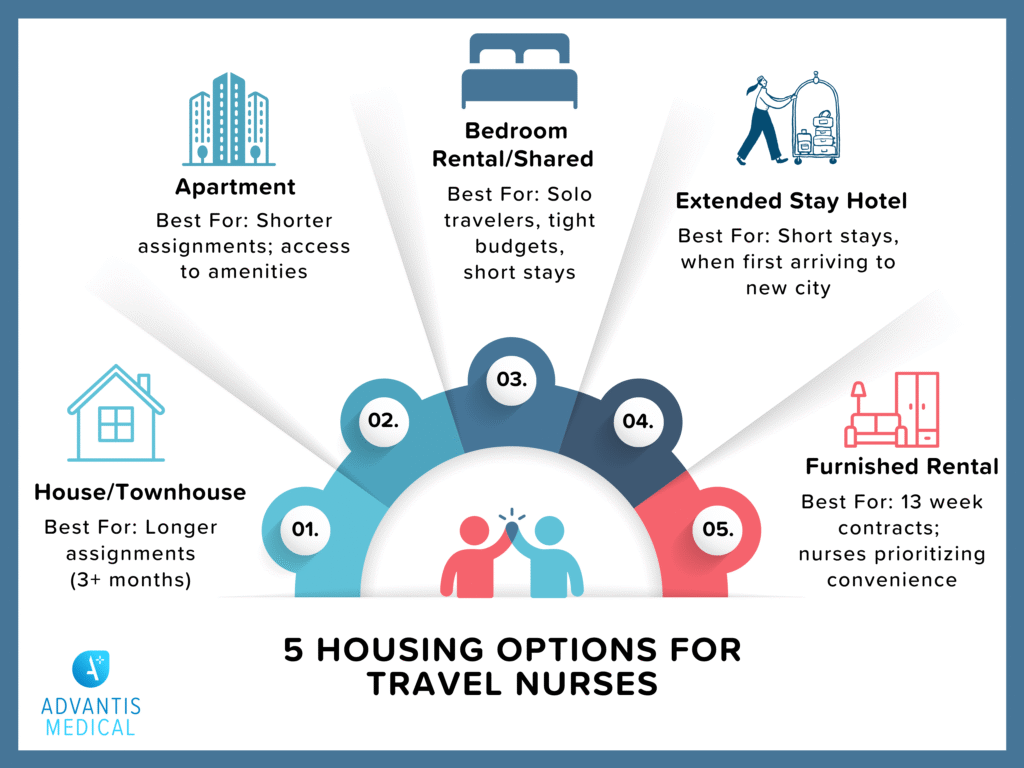
Finding the right travel nurse housing in Georgia means understanding what’s available and what works best for your specific assignment length, budget, and personal preferences. Here are the most common and effective short-term options:
1. Renting a House or Townhouse
If space is a priority, renting a house or townhouse can be a big upgrade from smaller apartments. This option gives you more privacy, often a yard, and can be perfect for travel nurses with a family, pet, or who just want more room to spread out.
- Pros: More space, privacy, often a yard, feels like a “home away from home”. Good for extended stays or those with specific needs.
- Cons: Potentially higher cost, may require more responsibility (e.g. lawn care, minor repairs), may need renter’s insurance. Utilities are usually separate.
- Best for: Longer assignments (3+ months), travel nurses with families or pets, and those who want a quiet residential environment. Always clarify responsibilities like lawn maintenance and pest control with the landlord before signing your lease.
2. Renting an Apartment or Condo
Many travel nurses opt for apartments or condos, a great balance of comfort, convenience, and often a more affordable price point than a standalone house. These units usually come with amenities like fitness centers, swimming pools, communal workspaces, and enhanced security, making them a popular choice for travel nurse housing in Georgia.
- Pros: Often includes amenities, usually lower maintenance for the tenant, good security, and variety of locations (urban to suburban). Many complexes are used for short-term leases.
- Cons: Less privacy than a house, potential for noise from neighbors, and parking may be an additional cost.
- Best for: Short to mid-length assignments (1-6 months), those who want a mix of community and personal space, and access to building amenities. Read the lease terms carefully, especially the early termination clause, in case your contract changes.
3. Renting a Room or Shared Living
If you’re on a very short-term contract, want maximum flexibility, or are on a tighter budget, renting a room in a shared house or apartment can be the most cost-effective option. This option gives you a comfortable “landing spot” without the full commitment of a lease, so you can save more of your housing stipend.
- Pros: Cheapest option, highest flexibility, the opportunity to meet new people (often other travel nurses or locals).
- Cons: Less privacy, shared common spaces (kitchen, bathroom), and potential for different schedules with housemates (especially important for night shift nurses).
- Best for: Short assignments (weeks to 1-2 months), budget-conscious nurses, those who don’t anticipate spending much time at home. It’s crucial to discuss house rules and schedules upfront to ensure compatibility and minimize disruptions to your rest.
4. Extended-Stay Hotels
Extended-stay hotels are a hassle-free option perfect for travel nurses who want simplicity and built-in amenities. These hotels offer private rooms, often with kitchenettes, and provide services like regular housekeeping, on-site laundry, and sometimes even free breakfast. They are great short-term rentals for travel nurses in a pinch or for very short assignments.
- Pros: All-inclusive utilities, no lease commitments, housekeeping, usually pet-friendly, immediate availability, privacy.
- Cons: Can be more expensive than other options for longer stays, limited space compared to apartments, and lacks a “homey” feel.
- Best for: Initial arrival, very short assignments (e.g. 2-4 weeks), temporary housing while searching for a more permanent solution, or travel nurses who travel light and prefer to spend less time “at home” and more time exploring their new surroundings.
5. Furnished Rentals
Often considered the gold standard for travel nurses, furnished housing in Georgia for travel nurses eliminates the daunting task of buying, renting, or moving furniture and essential household items. You can literally walk in and settle down immediately. Most furnished accommodations come with kitchen supplies, bedding, basic utilities, and sometimes even Wi-Fi, so you can focus on your work and explore your new city.
- Pros: Ready to move in, no furniture costs, utilities are often included, flexible lease terms (perfect for 13-week contracts), reduces stress, and allows you to pocket more of your stipend.
- Cons: Can be slightly more expensive than unfurnished options, decor might not be to your taste, and can be competitive in high-demand areas.
- Best for: All travel nurses, especially those on standard 13-week contracts, who want maximum convenience and minimal hassle while maximizing their housing stipend.
Bonus: Corporate Housing & Relocation Services
While less common for individual bookings, some larger agencies or hospitals might have relationships with corporate housing providers. These typically offer fully furnished apartments with all utilities included, often in prime locations, making it even easier. Ask your Advantis Medical recruiter if this is an option, especially if you want a truly hands-off housing solution.
Travel Nurse Housing in Atlanta: Costs, Tips & Top Areas
Travel Nurse Housing in Atlanta: Costs, Tips & Top Areas
Assignments in Atlanta are a popular choice travel nurses, with top hospitals, diversity, and nonstop activity. It also has one of the highest rental markets in the state. Knowing travel nurse housing in Atlanta is key to a successful assignment here.
- Costs in Atlanta: The median for a one-bedroom apartment in Atlanta is about $1,650/month, but finding furnished travel nurse housing in Atlanta can often range from $1,800 to $2,500+ per month for a one-bedroom, depending on the neighborhood, amenities, and how close it is to a hospital or MARTA station. Your goal is to find something comfortable that leaves room in your stipend for savings.
- Top Areas for Travel Nurses in Atlanta:
- Midtown/Downtown: Walkable and super convenient for major hospitals like Grady Memorial and Emory University Hospital Midtown. Has plenty of apartments, dining, and entertainment, but it can be pricey and busy.
- Decatur: A charming and walkable suburb east of downtown with its town square, shops, and restaurants. Safe and a good option for those working at Emory University Hospital (main campus). More suburban feel with easy access to the city via MARTA.
- Buckhead/Sandy Springs: Upscale, safe areas with high-end apartments and luxury amenities. Good for nurses assigned to Piedmont Atlanta Hospital and other facilities in the northern metro area. These areas are often on the higher end of the price spectrum for travel nurse housing in Atlanta but may offer a quieter suburban vibe.
Atlanta Tip: Use Furnished Finder or Airbnb and filter by “Near Hospital” or “MARTA access” to cut commute time and potentially reduce transportation costs, especially if parking is not included with your rental. Atlanta’s public transit (MARTA) is key to navigating the city without a car. When you work with Advantis Medical, your housing advisor can also verify listings and give you trusted housing leads specific to your Atlanta assignment.
- Highest-paying states and cities, ranked from live contracts
- Take-home pay and tax considerations
Regional Housing Cost Breakdown for Travel Nurses in Georgia
Rental prices vary greatly across Georgia. Here’s a quick rundown to help you budget for travel nurse housing in Georgia:
| City/Area | Average 1-Bedroom Rent | Notes |
| Atlanta | $1,650/month | Highest costs, but more job opportunities and amenities. |
| Savannah | $1,350/month | Historic charm coastal access, and a popular tourist destination. |
| Augusta | $1,100/month | More affordable homes to major medical centers. |
| Macon / Columbus | $900–$1,000/month | Mid-sized cities with lower living expenses. |
| Rural Areas | $700–$900/month | Lowest costs, but limited amenities and furnished options. |
Data Source
RentCafe, May 2025. Prices for furnished or short-term rentals may be higher.
Key Cost Drivers to Consider:
- Seasonal Demand: Prices spike during peak tourist seasons or major events (e.g., the Masters in Augusta, the college football season in Athens/Atlanta).
- Pets: Pet-friendly housing often carries additional fees (deposits, monthly pet rent).
- Lease Length: Longer stays (e.g., 6+ months) often bring lower monthly rent compared to typical 13-week contracts.
Transportation and Commute for Travel Nurses in Georgia
Outside of Atlanta, public transportation is limited, so most travel nurses will need to drive their personal vehicles for their commute and to get around the state. Always make sure your rental includes parking, or check for street parking rules and costs, as this can be a hidden expense, especially in urban areas.
Top Transit Systems (Limited to Major Cities):
- MARTA (Atlanta): Atlanta’s main public transit system, bus and rail. Essential for getting around the city without a car and a big factor for travel nurse housing in Atlanta.
- Savannah CAT (Chatham Area Transit): Bus service within Savannah.
- Augusta Transit: Bus routes within Augusta.
Pro Tip: If you don’t have a car or want to avoid daily driving, prioritize travel nurse housing in Georgia within walking distance of your facility or directly along public transit routes. Many travel nurses choose to live very close to their hospital to reduce commute stress, save on gas, and maximize their rest between shifts. Your Advantis Medical recruiter can help you find assignments located close to your facility.

Agency-Placed Housing vs. Housing Stipend: Maximizing Your Income & Flexibility
When looking for travel nurse housing in Georgia, you typically have two options from your agency: agency-provided housing or a housing stipend. While agency-provided housing is convenient, taking a housing stipend and finding your own place often provides more flexibility and can increase your “real take-home pay” significantly.
Agency-Provided Housing
How it Works: Advantis Medical, as your trusted travel nurse agency, finds and secures your housing for you. You typically move into a pre-arranged apartment or other lodging.
- Pros:
- Convenience & Simplicity: A big stress reliever. You don’t have to search, negotiate, or deal with landlords. Especially helpful for new travel nurses or those with very little time.
- Ready-to-Move-In: Often fully furnished with utilities included, so you can just move in.
- Financial Predictability: Housing costs are covered by the agency, so your budget is more predictable with no hidden fees or fluctuating rents.
- Cons:
- Less Control: You have less say in the location, amenities, or decor of your housing. The agency chooses what might not align with your preferences (e.g., proximity to friends, specific gym).
- Potential for Lower “Real” Take-Home Pay: While it seems like “free” the cost of agency-provided housing is built into your overall compensation package. By taking this option, you forgo the tax-free housing stipend, which means a larger portion of your pay becomes taxable income and potentially reduces your overall net pay.
Housing Stipend: Your Path to Flexibility and Savings
How it Works: Instead of providing housing, the agency gives you a tax-free housing stipend (a set amount of money) on top of your taxable hourly wage. You then find and pay for your own housing.
- Pros:
- Maximum Control & Flexibility: You choose exactly where you live, what type of housing, and what amenities you want. This allows you to truly immerse yourself in your new location and find a place that feels like home.
- Potential for Big Savings & Higher “Real” Take-Home Pay: This is the biggest draw. If you find housing that costs less than your non-taxable stipend amount, you can pocket the difference. This is tax-free, so it effectively increases your net pay from the assignment. Many travel nurses choose assignments in areas with lower housing costs to maximize this benefit.
- Tailored to Your Lifestyle: You can find housing that fits your needs, whether it’s pet-friendly, has a specific gym, is in a particular neighborhood, or allows roommates to further cut costs. Your Housing Experience: You negotiate directly, read reviews, and ensure the property meets your standards so you have a better stay.
- Cons:
- More Work: The entire housing search, negotiation, and payment process is on you. This takes time and effort.
- Upfront Costs: You’ll pay for security deposits, the first month’s rent, application fees, and utility setups.
- Going Over Budget: If you can’t find housing within your stipend amount, the extra cost comes out of your pocket and erodes your savings.
Pro Tip: Many travel nurses prefer the stipend route because they can pocket extra money if they find housing below the stipend rate. This guide is designed to help you do just that—find travel nurse housing in Georgia that fits your lifestyle and helps you keep more of your income.


Where to Find Short-Term & Furnished Rentals for Travel Nurses in Georgia
Once you decide to take on the housing search yourself (with a stipend), you’ll find many reliable websites and platforms specializing in short-term rentals for travel nurses in Georgia.
Advantis Medical Bonus: When you work with Advantis Medical, our in-house housing support team is here to help! Decide your top housing priorities, like commute time, pet-friendly units, or budget, and our advisors will help you find the perfect match. Learn more about our housing help on our Benefits Page, where you’ll also find a helpful video explaining our support.
Here are the top platforms to consider for travel nurse housing in Georgia:
Furnished Finder
- Pros: Built for travel nurses. You can filter by city, price, amenities, and hospital proximity. Landlords list properties with nurses in mind, often with flexible leases and an understanding of nurse schedules. Great resource for finding furnished housing in Georgia for travel nurses.
- Tips: High likelihood of finding suitable, affordable, and flexible options. Many properties are already vetted for travel nurse needs, so your search will be more efficient and trustworthy.
Airbnb
- Pros: Good for all types of rentals (condos, houses, private rooms), highly searchable with filters for length of stay, amenities, and instant booking. Perfect for true short-term (under 3 months) or monthly stays.
- Tips: Look for monthly discounts offered by hosts. Read reviews carefully, especially those from other long-term guests. Message hosts directly to ask about travel nurse discounts or flexibility.
Vrbo:
- Pros: Similar to Airbnb but more focused on vacation rentals (whole homes, apartments). Good for longer stays, especially if you’re looking for a house or a larger apartment. Often has a different inventory than Airbnb.
- Tips: Can be more limited for very long-term (3+ months) options compared to Airbnb, but it is always worth checking. Filters similar to Airbnb.
Aparments.com & Zillow
- Pros: Primarily for traditional long-term rentals, but increasingly offer filters for furnished and short-term lease or corporate housing. Comprehensive listings from apartment complexes and private landlords.
- Tips: Use the advanced search filters for furnished, short-term, or flexible lease terms. You may need to call specific apartment complexes directly to ask about their travel nurse programs or corporate rates, as not all options are listed online.
Homestay.com:
- Pros: Specializes in room rentals within someone’s home, offering a unique cultural experience at often very affordable rates. Good if you’re looking for a room to rent during your travel nursing assignment in Georgia and want to save big on your housing expenses.
- Tips: Great for very short-term contracts or if you’re on a tighter budget and don’t mind sharing common spaces. You can search by length of stay, location, and price range.
Social Media Groups & Networking:
- Pros: Facebook groups can connect you directly with landlords, other nurses looking for roommates, or current residents who know of available units. These often have hidden gems not found on larger sites.
- Tips: While these groups can be helpful, always exercise caution. If you’re starting an assignment with Advantis Medical, check with your recruiter before relying solely on outside posts or recommendations. Advantis Medical can help verify listings and provide you with trusted housing leads so you can have peace of mind. Never send money without a signed agreement and thorough verification.
Each of these sites, combined with the expert support of the Advantis Medical housing team, can help you find reliable travel nurse housing in Georgia based on your preferences and budget so you can focus on your work and explore your new surroundings.
Safety Tips for Travel Nurse Housing in Georgia
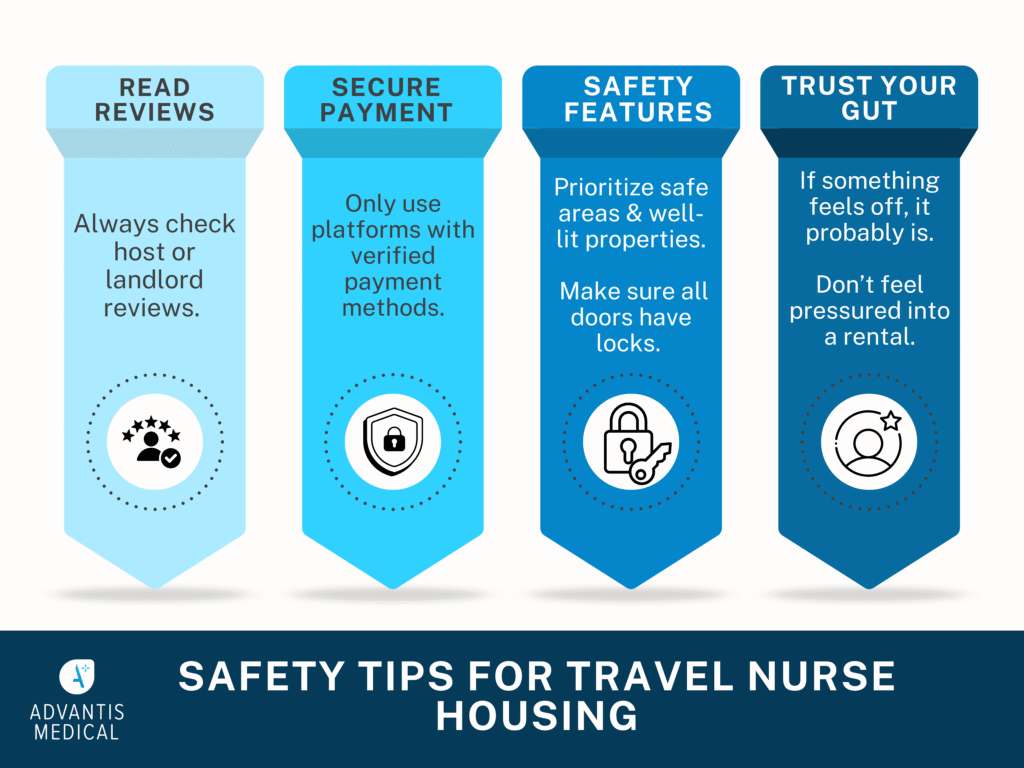
Your safety and peace of mind are the top priority. When looking for travel nurse housing in Georgia, remember:
Trust Your Gut: If something feels off, it probably is. Don’t feel pressured into a rental that raises red flags. Remember, Advantis Medical can help you verify listings and provide you with trusted housing leads.
Read Reviews Thoroughly: Always check host or landlord reviews on platforms like Airbnb, VRBO, or Furnished Finder. Look for consistent positive feedback, especially about safety and responsiveness.
Secure Payments: Use platforms with verified payment methods. Never send money via wire transfers, gift cards, or services like Zelle to unknown individuals, especially if they claim to be out of the country. Never pay through unverified links or platforms like Craigslist.
Clarify All Terms: Understand your cancellation policy, move-in/move-out dates, and what happens if your assignment ends early or is extended. Get all agreements in writing.
Lock and Location: Prioritize safe areas and well-lit properties. Make sure the rental has locks on all doors and windows. If possible, do a virtual tour or ask for current photos/videos to confirm the property’s condition and surroundings.
A Travel Nurse Agency That Truly Cares
We do more than just offer high-paying contracts. At Advantis Medical, we help you navigate housing decisions with confidence so you can find the best travel nurse housing in Georgia.
Our team connects you with housing resources, helps you calculate your stipend, and shares nurse-tested recommendations to make your housing search easy. With over 700 5-star reviews, we’ve earned our reputation for supporting travel nurses every step of the way, providing personalized Gold Standard service. Whether you want one-on-one guidance from our housing team or prefer to go solo with a housing stipend, our recruiters are here to make it easy.
Get started today—explore travel nurse jobs and see what’s possible with Advantis Medical!
FAQs: Travel Nurse Housing in Georgia
What are the best travel nurse housing options in Atlanta?
When looking for travel nurse housing in Atlanta, popular areas are Midtown, Decatur, and Sandy Springs. Use Furnished Finder or Airbnb and filter for fully-furnished options with flexible leases and close to hospitals or MARTA. Your Advantis Medical housing advisor can give you trusted leads specific to your Atlanta assignment.
Where can I find short-term rentals in Georgia?
To find short-term rentals for travel nurses in Georgia, use Furnished Finder, Airbnb, and specialized Facebook groups. Rural areas are often cheaper but have fewer amenities. Always talk to your Advantis Medical housing advisor for more verified options.
Should I choose agency-placed housing or a stipend for my Georgia assignment?
If you want more flexibility and financial upside by finding budget-friendly housing and keeping the tax-free difference, a housing stipend might be best. If you prefer convenience and a hands-off approach to housing, agency-provided housing is the way to go. Your Advantis Medical recruiter can help you decide.
How much should I budget for travel nurse housing in Georgia?
While costs vary by city, unit size, and amenities, aim to keep your rent at 25-30% of your weekly take-home pay to maximize your savings. Based on a typical travel nurse income, that’s $1,200-$1,600/month for a one-bedroom. But you can find it lower in rural areas. Your Advantis Medical housing advisor can help you create a realistic budget based on your stipend.
What are the safest ways to find travel nurse housing in Georgia?
Always use verified housing platforms like Furnished Finder, Airbnb, and Vrbo, which have secure payment methods and landlord/host reviews. Never send money through unverified links or platforms. Prioritize safe neighborhoods and confirm all lease details in writing. Your Advantis Medical will verify listings and give you trusted housing leads to keep you safe.
What affects travel nurse housing costs in Georgia?
Several things impact travel nurse housing in Georgia costs: location (Atlanta is the most expensive), time of year (seasonal demand), if you bring pets, length of lease, and amenities included in the rental.
How do I find pet-friendly travel nurse housing in Georgia?
Start your search early and use “pets allowed” filters on rental platforms. Prepare a “pet resume” with vaccination records and references. Know that pet-friendly options often come with extra fees (deposits or monthly pet rent) that will add to your overall budget. Your Advantis Medical team can also give you resources for pet-friendly options.


