

National Physical Therapy Month 2026: Celebrating Your Expertise


In this article
When a patient tells you they made it through the grocery store without leaving early, you hear more than an update about errands.
You think about the work on balance and endurance, the conversations about pacing, and the adjustments along the way. You know what that trip took and what it means to the person telling you.
October is National Physical Therapy Month. At Advantis Medical, we want to thank the physical therapists and physical therapist assistants whose work helps make those everyday moments possible.
This month is also a chance to recognize your own progress. Whether you reconnect with a former mentor or notice a skill you’ve grown more confident using, there are meaningful ways to celebrate that fit into an ordinary workweek.
When Is National Physical Therapy Month in 2026?
National Physical Therapy Month takes place October 1st–31st, 2026. It recognizes PTs, PTAs, and students while helping the public understand the benefits of physical therapy.
This year, the American Physical Therapy Association is continuing “PT For Future Me.” The campaign highlights physical therapy’s role in prevention, movement, and resilience throughout life. You can find the theme and participation materials on APTA’s National Physical Therapy Month page.
You see that connection when a patient talks about what they want to keep doing years from now. Their goal might be staying involved in a favorite activity or managing daily tasks at home. Those conversations give the campaign a personal meaning.

6,000+ live contracts nationwide, each showing exact weekly pay, shift, and start date. Updated today.
Meaningful Ways to Mark PT Month
You may want to celebrate with colleagues, share something about your work, or reflect on how far you’ve come. Here are four ways to make the month personal.
Share what people don’t see during a session
Think of a question you hear from people outside physical therapy. Start with an everyday task, then explain one detail they might overlook.
For a question about transfers, you could explain why practicing in a clinic chair may differ from getting out of a low sofa at home. That gives them a concrete way to understand why the details of someone’s environment matter.
You don’t need to turn the conversation into a clinical lesson. A short explanation of something familiar can help people understand your work. Use general examples unless you have the appropriate permission to share an individual’s story.
Thank someone for a lesson you still use
A former clinical instructor, mentor, or colleague may have changed how you approach a patient conversation or helped you become more comfortable asking for support.
Tell them what stayed with you.
Mention how they explained their reasoning or welcomed your questions. If you remember a particular conversation, describe what you took from it and how you use it now. A short, specific note gives them a chance to see the lasting effect of something they taught you.
Recognize a skill you’ve grown into
What feels more manageable now than it did a year ago?
Perhaps you’re clearer during handoffs or more comfortable raising a concern. If you travel, you may have become more confident joining an unfamiliar team and learning its routines.
Write down what happened and what you handled differently, without including identifying patient details. You’ll have a concrete example to bring to your next review or interview.
It doesn’t have to be a major achievement. A conversation you once found difficult can be a useful measure of how much you’ve learned.
Trade one useful idea with a colleague
Ask a peer about a resource they return to or a course that changed their thinking.
If they recommend a course, ask what they’ve actually used from it. Their answer can help you decide whether the content fits a question you’re working through or a skill you want to build.
You can share something useful in return. A good conversation might leave each of you with a resource to explore or a different way to approach a familiar question.
Your Progress Deserves Attention, Too
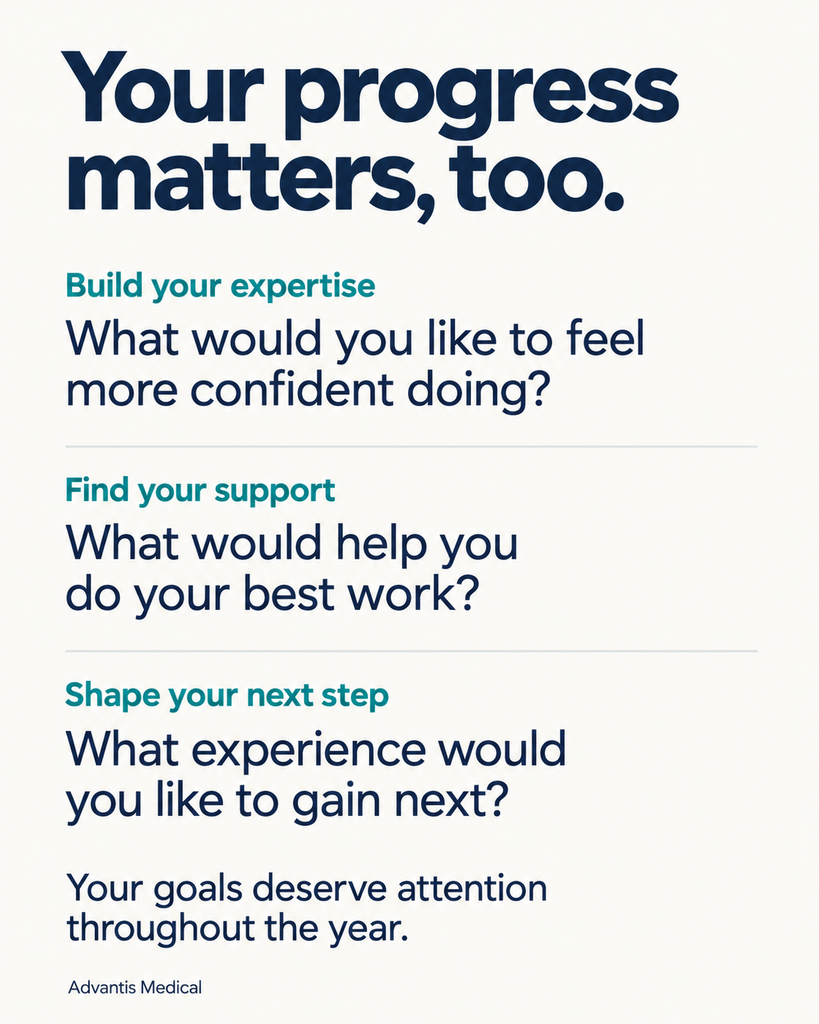
Looking back at what you’ve learned can help you decide what you need next. Set aside a few minutes for three questions:
- What part of my work would I like to do more of? Think about the setting or patient population you enjoy, as well as opportunities to teach or work closely with colleagues.
- Where would more support make a difference? You might want access to a mentor, clearer expectations, or help building confidence with a particular skill.
- What do I want my work to make room for? Consider your schedule, relationships, location preferences, and interests outside healthcare.
Choose one answer you can act on. That might mean discussing a question with a colleague or telling your recruiter what you want to understand before another assignment.
For travel PTs and PTAs, being specific can make those conversations more useful. “I want a supportive team” is a starting point. Explaining that you want a clear clinical contact and time for questions during orientation gives your recruiter something concrete to help clarify.
Find Support for Your Next Therapy Assignment
This National Physical Therapy Month, thank you for the expertise you bring to your patients and teams. Your own career goals deserve someone’s attention, too.
At Advantis Medical, our recruiters listen to what matters to you and help you understand an opportunity before you decide. Tell us about the setting where you feel confident, the schedule that fits your life, and the support you want to ask about.
Considering another assignment? Explore physical therapy travel opportunities with Advantis Medical and connect with a recruiter about what you’re looking for.


